




An Introduction To The Phoenix House
An Introduction To The Phoenix House
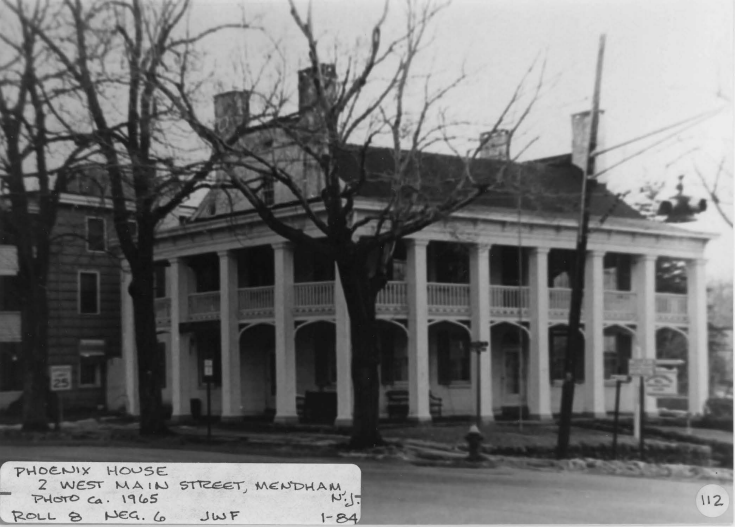
The Phoenix House was built around 1800 and was initially an academy for young ladies. In 1806 it was converted to an inn and tavern, the Phoenix Hotel Roadhouse, by William Phoenix. The basic footprint of the building was 1440 Sq. Ft. until the front portico was added in 1838, to make an architectural statement for travelers on the Washington Turnpike stagecoach road to Easton, PA. Unfortunately, we do not have any records of the interior at the time. In the 1850's William’s daughters took over the operation of the Phoenix House and it became a genteel boarding house, although, it is alleged that Miss Phoenix sold liquor through a side-door in the kitchen. Records tell us that there were eleven places to get a “drink” in Mendham at the time, compared to just two today. Most people, children included, drank hard cider distilled from local apples, instead of water.
As the 1800s progressed, Mendham developed a reputation as a summer resort; and boarding guests became one of the industries in the village. The most famous guest at the Phoenix House was General Abner Doubleday, a retired Civil War hero, considered to be the "Father of Modern Baseball."
The building evolved over the Years, particularly the kitchen which was sometimes an addition, and in 1919, Senator and Mrs. Arthur Whitney, with others, purchased the Phoenix House from the Phoenix family. It was used as a teashop, antiques store, and dress shop until 1929, when the Whitneys bought out the other owners and set out to renovate and preserve this gorgeous building.
In 1938, Whitney and his wife donated the mansion to the people of Mendham Borough in order that it might be preserved for future generations in as nearly as possible to its original condition. The Whitneys did not want any recognition for their generosity, and they stipulated that the building be known as “The Phoenix House.”
We think that the building as you see it today is much as was after it was renovated by the Whitney family in 1932, some of the furniture in this living room and dining room are from the period, and the former bedrooms have been converted into offices. We have building plans on display from 1932 prior to the renovations by the Whitneys.
The third floor was used for sleeping space and storage. In the early to mid-1800’s, it was customary practice in Inns for strangers to share not just rooms, but also beds.
Today the Phoenix House is used as the Borough Municipal Hall.



.jpg.png)

.png)


.png)
